

Introduction:
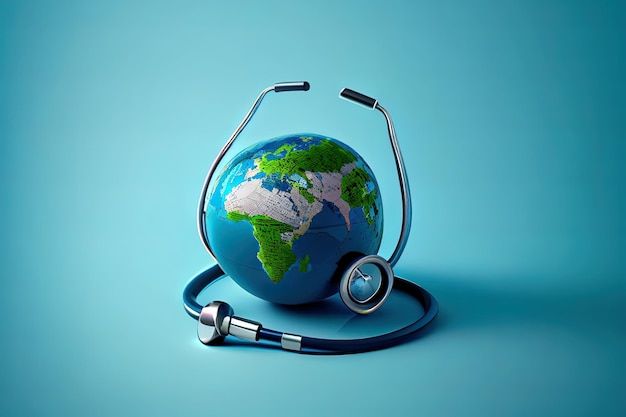
In an interconnected world, health challenges transcend borders. From pandemics and antibiotic resistance to maternal health and nutrition, managing global health requires a coordinated, unified response. At the forefront of this effort is the World Health Organization (WHO) — the leading authority in global public health and the key actor in Global Health Governance (GHG).
Established in 1948, the WHO plays a central role in setting health standards, supporting disease control, responding to emergencies, and shaping global health policy. It acts as the custodian of international health norms and a trusted partner to over 190 countries.
This comprehensive overview explores the WHO’s role, responsibilities, policy mechanisms, challenges, and impact on shaping a healthier world.
The Foundation and Mission of WHO
🏛️ Establishment and Mandate
The World Health Organization was formed as a specialized agency of the United Nations on April 7, 1948 — now celebrated globally as World Health Day. Its constitution states that “health is a fundamental human right” and its primary mission is to ensure “the attainment of the highest possible level of health for all people.”
🌐 Key Functions:
Coordinate international health responses.
Set health standards and guidelines.
Monitor health trends and statistics.
Provide technical assistance and capacity-building.
Support research and innovation.
Lead emergency preparedness and pandemic responses.
Global Health Governance (GHG): What It Means
🧩 Definition
Global Health Governance refers to the systems, institutions, and processes that influence global health policy, coordination, and action. WHO is at the core of this governance ecosystem, working with national governments, NGOs, civil society, and private stakeholders.
🧭 WHO’s Role in GHG:
Acts as a neutral convenor for international dialogue and treaty negotiations.
Facilitates multilateral cooperation through partnerships (e.g., GAVI, UN agencies).
Serves as a norm-setting body issuing frameworks like the International Health Regulations (IHR).
Provides authoritative guidance and rapid responses to public health crises.
Key Instruments & Frameworks by WHO
🛡️ International Health Regulations (IHR – 2005)
Legally binding treaty signed by 196 countries.
Aims to detect, assess, report, and respond to public health emergencies of international concern.
Requires countries to strengthen surveillance, lab capacity, and emergency coordination.
💉 COVAX & COVID-19 Response
WHO co-led the COVAX facility to ensure equitable access to vaccines during the COVID-19 pandemic.
Helped deliver millions of doses to lower-income countries.
Developed and disseminated global COVID-19 guidelines, testing protocols, and response measures.
🔬 Essential Medicines List (EML)
A list of minimum medicine needs for a basic healthcare system.
Promotes universal access to affordable and quality-assured medicines.
📃 Framework Convention on Tobacco Control (FCTC)
First international health treaty adopted under WHO.
Aims to reduce tobacco use through advertising bans, warnings, and taxation.
🔄 Global Health Initiatives Supported:
Polio Eradication Program
Universal Health Coverage (UHC) by 2030
Mental Health Action Plans
Health systems strengthening
One Health approach (interlinking human, animal, and environmental health)
Criticism and Controversies
❗ Delayed Emergency Responses
WHO has been criticized for delayed alerts, notably during:
2014 Ebola outbreak in West Africa
2020 initial response to COVID-19, where it was accused of relying too heavily on China’s early reports.
❗ Limited Enforcement Power
WHO can recommend and advise, but lacks the legal authority to enforce compliance from member states. Its influence relies on diplomacy and consensus.
❗ Funding Dependence
WHO’s budget is largely funded by voluntary contributions from wealthy countries and private organizations.
This raises concerns about political influence.
Leads to funding imbalances, where high-profile diseases receive more attention than underfunded but deadly health issues (e.g., TB, malaria).
❗ Inequality in Vaccine Distribution
Despite WHO’s push for equity, vaccine nationalism by rich countries during COVID-19 showed the gaps in global solidarity.