Introduction
Venezuela, once the richest country in Latin America, has become a stark example of how political mismanagement, economic collapse, and social unrest can plunge a nation into crisis. With vast oil reserves and a promising future in the early 2000s, the country now faces hyperinflation, food and medicine shortages, mass emigration, and a humanitarian emergency. This blog explores the roots, development, and consequences of the Venezuela Crisis and what the world can learn from it.
Historical Background
Venezuela’s modern crisis didn’t happen overnight. It’s the result of decades of political instability, corruption, and economic dependency on oil.
1980s–1990s: Venezuela experienced frequent economic booms and busts due to oil price fluctuations. Poor governance and corruption began to take a toll.
1999: Hugo Chávez came to power, launching the “Bolivarian Revolution.” His socialist policies focused on wealth redistribution and nationalization of industries, especially oil.
Early 2000s: High oil prices allowed Venezuela to fund social programs, reducing poverty and increasing education and healthcare access.
Post-2013: After Chávez’s death, Nicolás Maduro became president. Global oil prices crashed, but the government continued unsustainable spending, leading to an economic tailspin.
Economic Collapse
Overdependence on Oil
Venezuela holds the largest proven oil reserves in the world, but its economy became overly dependent on this single resource. When oil prices dropped in 2014, the country lost over 90% of its income.
Hyperinflation
The government printed excessive money to cover deficits, leading to one of the worst cases of hyperinflation in history.
In 2018, inflation reached 1,700,000%.
By 2020, the Venezuelan bolívar was practically worthless.
People turned to bartering or using U.S. dollars and cryptocurrencies.
Food and Medicine Shortages
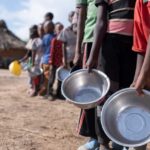
Price controls, lack of imports, and broken supply chains led to extreme shortages:
Over 80% of Venezuelans live in poverty.
People queue for hours for basic necessities like flour, rice, and toilet paper.
Hospitals lack basic equipment, antibiotics, and even electricity.
Political Turmoil
Venezuela’s political landscape has been deeply polarized:
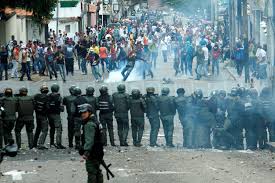
Maduro’s Regime: Accused of election rigging, suppressing dissent, and jailing opposition leaders.
2019 Power Struggle: Juan Guaidó, head of the National Assembly, declared himself interim president, supported by over 50 countries.
Despite international pressure, Maduro maintained control with support from military and allies like Russia, China, and Iran.
Social and Humanitarian Crisis
Mass Migration
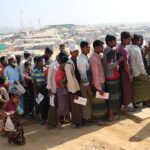
More than 7.7 million Venezuelans have fled the country since 2015 — the largest displacement crisis in Latin America.
Most have gone to Colombia, Peru, Brazil, and Ecuador.
Refugees face xenophobia, exploitation, and struggle for survival.
Crime and Security
Venezuela has one of the highest crime rates in the world:
Gangs and paramilitary groups operate with little interference.
Citizens often face extortion, kidnapping, and murder.
The police and military have been accused of human rights violations, including torture and extrajudicial killings.
International Response
Sanctions and Diplomacy
The U.S., EU, and other nations imposed sanctions targeting Venezuelan officials and oil exports, aiming to pressure the Maduro regime.
Humanitarian Aid
International organizations like the UN, Red Cross, and World Food Programme have provided emergency aid, but access is limited by the government.
Political Mediation
Efforts by Norway, Mexico, and other neutral parties to mediate dialogue between Maduro and the opposition have seen limited success.
Current Situation (2025 Update)
As of 2025:
The economy has shown slight stabilization due to dollarization and cryptocurrency use.
Some businesses are reopening, and private imports have resumed.
However, infrastructure remains broken, and millions still face hunger and disease.
Maduro remains in power, and democratic reforms remain elusive.