




Introduction
Latin America has witnessed a notable resurgence of left-wing governments and movements in recent years, signaling a shift away from the conservative and neoliberal policies that dominated much of the early 21st century. This new wave of progressive politics is reshaping the region’s social, economic, and foreign policies with emphases on social justice, inequality reduction, and regional integration. This blog explores the causes, key players, impacts, and future prospects of the left-wing resurgence in Latin America.
1. Historical Context
-
In the early 2000s, the “Pink Tide” saw many Latin American countries elect leftist leaders like Hugo Chávez (Venezuela), Lula da Silva (Brazil), Evo Morales (Bolivia), and Rafael Correa (Ecuador).
-
By the mid-2010s, many of these governments faced economic downturns, corruption scandals, and political backlash, leading to a conservative swing.
-
Recently, the pendulum is swinging back left with new progressive leaders elected across the region.
2. Causes of the Resurgence
Economic Inequality and Social Demands
-
Persistent inequality and poverty fueled popular demands for change.
-
The COVID-19 pandemic exposed and worsened social disparities, increasing calls for state intervention.
Disillusionment with Conservative Policies
-
Neoliberal reforms often led to austerity measures and cuts in social spending.
-
Corruption scandals and political crises weakened conservative governments’ legitimacy.
Grassroots Movements and Social Mobilization
-
Indigenous groups, youth activists, and labor unions have played crucial roles in mobilizing support for progressive agendas.
3. Key Countries and Leaders
Mexico
-
Andrés Manuel López Obrador (AMLO), elected in 2018, champions anti-corruption and social welfare programs.
Argentina
-
Alberto Fernández, with Cristina Fernández de Kirchner as vice president, returned to power in 2019 advocating progressive economic policies.
Chile
-
After mass protests in 2019, Chile is rewriting its constitution and saw left-wing Gabriel Boric elected president in 2021.
Peru and Colombia
-
New leftist leaders and candidates have gained prominence, reflecting changing voter priorities.
Brazil
-
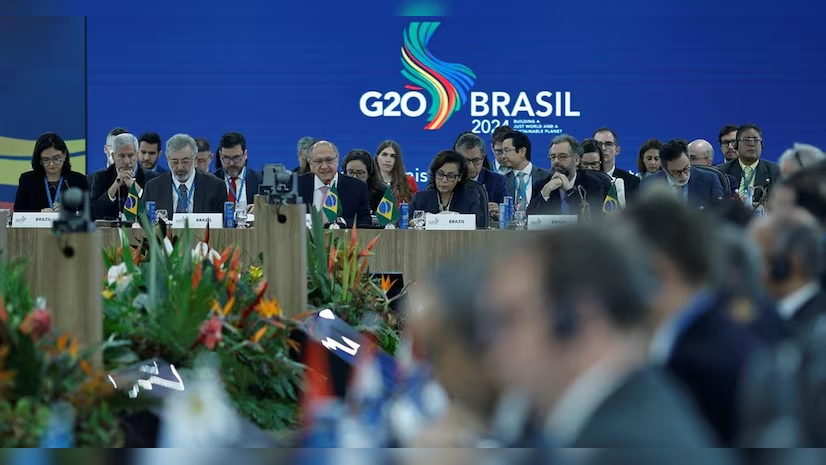
Luiz Inácio Lula da Silva’s return to power in 2023 marks a major comeback for the left in the region’s largest country.
4. Policy Priorities
-
Social Welfare: Expanding healthcare, education, and poverty reduction programs.
-
Labor Rights: Strengthening protections for workers and unions.
-
Environmental Justice: Greater emphasis on sustainability and indigenous rights.
-
Regional Integration: Reviving alliances like CELAC and UNASUR to counterbalance US influence.
5. Challenges Ahead
-
Economic instability and debt pressures constrain policy options.
-
Political polarization risks social unrest and governance difficulties.
-
Balancing progressive reforms with market confidence is a delicate act.
-
Opposition from conservative sectors and external actors remains strong.
6. Global Implications
-
The left-wing resurgence impacts global commodity markets, climate policies, and diplomatic alignments.
-
Latin America’s evolving political landscape influences relations with the US, China, and Europe.
-
It also shapes international discussions on inequality, development, and human rights.