

Introduction
Brazil, a land of immense natural beauty and cultural richness, is not just known for samba, football, and the Amazon. It is also a powerful player on the world stage. With its vast natural resources, strategic geographic location, and growing diplomatic influence, Brazil holds a significant position in shaping the future of global politics, economics, and environmental policy. This blog explores Brazil’s evolving role in international affairs, its contributions to global governance, and its potential in the decades ahead.
1. Brazil’s Economic Influence
A Leader in Latin America
Brazil is the largest economy in South America and one of the top 10 economies globally by purchasing power parity. Its diverse economy includes:
Agriculture: Brazil is one of the world’s top producers of soybeans, beef, coffee, and sugar.
Mining: Rich in iron ore, gold, and other minerals.
Energy: A leader in biofuels and hydropower, with growing investment in renewable energy.
Trade and Global Markets
Brazil has strong trade ties with China, the United States, and the European Union. It is a founding member of Mercosur, promoting regional trade integration. Additionally, Brazil plays a crucial role in global food security due to its agricultural output.
2. Political and Diplomatic Engagement
Role in the Global South
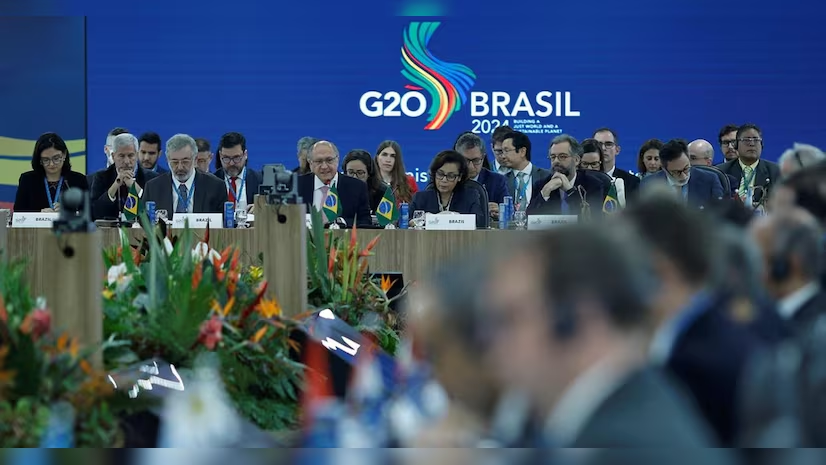
Brazil represents the interests of developing nations in global discussions. As a founding member of BRICS (Brazil, Russia, India, China, South Africa), Brazil advocates for a more equitable world order, pushing for reforms in international financial institutions like the IMF and World Bank.
United Nations and Peacekeeping
Brazil has been a key contributor to UN peacekeeping missions and is an advocate for multilateralism. It consistently campaigns for a permanent seat on the UN Security Council, arguing that its size, economy, and peacekeeping contributions justify a larger voice in global decisions.
3. Environmental Leadership
Stewardship of the Amazon
Brazil is home to 60% of the Amazon Rainforest, one of the most vital ecosystems on the planet. As such, Brazil plays a critical role in:
Global carbon regulation.
Climate change mitigation.
Biodiversity preservation.
Brazil’s environmental policies directly impact the world. While recent years have seen a rise in deforestation, international pressure and domestic activism continue to push for sustainable management.
Renewable Energy Leadership
Brazil is a world leader in renewable energy, with over 80% of its electricity coming from hydroelectric power. It also has one of the most successful biofuel programs, primarily ethanol from sugarcane.
4. Cultural and Social Influence
Brazil’s cultural reach is global:
Music and Dance: From samba to bossa nova, Brazilian music influences genres worldwide.
Sports: As a five-time FIFA World Cup champion, Brazil’s football legacy is legendary.
Cinema and Literature: Brazilian films and authors like Paulo Coelho have international recognition.
Tourism: Rio de Janeiro, the Amazon, and Iguaçu Falls attract millions of visitors annually.
These cultural exports give Brazil significant soft power, enhancing its global appeal.
5. Challenges to Global Leadership
Despite its strengths, Brazil faces several internal and external challenges:
Political instability: Corruption scandals and political polarization have weakened institutions.
Economic inequality: While the economy is strong, wealth distribution remains uneven.
Environmental pressure: Balancing development with preservation is a growing challenge.
Global perception: Leadership changes often shift foreign policy, affecting consistency.
6. Future Prospects
Brazil’s future on the world stage will depend on:
Strengthening democratic institutions.
Sustained investment in innovation and infrastructure.
Commitment to climate and environmental goals.
Proactive diplomacy in multilateral organizations.
With its rich resources, young population, and growing middle class, Brazil is poised to be a major global player in the 21st century.