




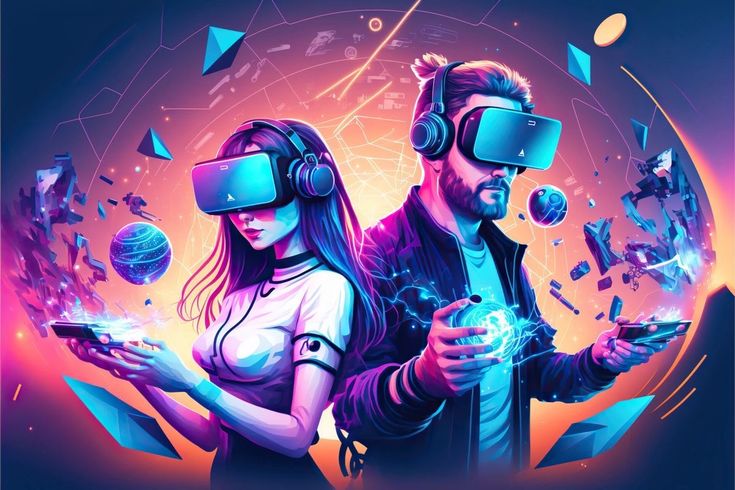
The world of gaming is rapidly evolving, and Virtual Reality (VR) gaming along with the concept of the Metaverse is at the forefront of this revolution. These two innovative technologies are changing the way we play, interact, and experience the digital world. From fully immersive, lifelike game environments to shared virtual spaces that merge gaming with social interaction, VR gaming and the Metaverse are set to shape the future of digital entertainment.
In this comprehensive guide, we will explore the exciting worlds of VR gaming and the Metaverse, highlighting how these technologies are transforming the gaming industry, and what players can expect in the near future.
What is VR Gaming? 🕶️🎮
Virtual Reality (VR) gaming is an immersive gaming experience that places players inside a virtual environment, where they can interact with the game world in real time. Unlike traditional gaming, where players view the game on a screen, VR gaming uses specialized hardware such as VR headsets, motion controllers, and even haptic feedback devices to create a sense of presence in a digital world.
Key Components of VR Gaming:
VR Headsets 🕶️
The centerpiece of any VR gaming experience is the VR headset. These headsets contain screens and sensors that track your head movements, allowing you to look around and interact with the virtual environment as if you were physically inside it. Popular headsets include:Oculus Quest 2 (now Meta Quest)
PlayStation VR
HTC Vive Pro
Valve Index
Motion Controllers 🎮
Motion controllers are handheld devices that allow you to interact with the virtual world by mimicking the movements of your hands. They can be used for actions like grabbing objects, pressing buttons, or even wielding weapons in games. Many VR controllers feature haptic feedback, which provides tactile sensations to make interactions feel more realistic.Tracking Systems 📍
Advanced tracking systems are used to detect the player’s movements and translate them into the virtual environment. Some headsets have inside-out tracking (cameras built into the headset itself), while others rely on external sensors placed in the room.
Popular VR Gaming Experiences:
Beat Saber 🥁: A rhythm-based game where players slice blocks to the beat of the music, offering an exciting and physical VR experience.
Half-Life: Alyx 🔫: One of the most praised VR games, offering an immersive, action-packed adventure set in the Half-Life universe.
The Walking Dead: Saints & Sinners 🧟: A survival horror game where players experience the zombie apocalypse in full VR.
The Benefits of VR Gaming:
Immersion 🌌: VR offers a level of immersion that traditional gaming cannot match. When you’re wearing a headset, it feels as though you’ve entered the game world itself, increasing emotional engagement and overall enjoyment.
Physical Activity 🏃: Many VR games require you to move your body—whether it’s jumping, ducking, or even dancing. This makes VR gaming a more physically engaging experience than sitting in front of a traditional console or PC.
Social Interaction 🗣️: With multiplayer VR experiences, players can interact with others in a more natural and immersive way than text or voice chat allows.
The Metaverse: The Digital Future 🌐
The Metaverse is a collective virtual space that is made up of interconnected digital worlds, offering a seamless and immersive experience where people can interact with each other and the environment in real-time. Think of it as a virtual universe where players can live, work, play, socialize, and even create digital assets. While still in its early stages, the Metaverse is poised to become the next big evolution in how we engage with digital content.
Key Features of the Metaverse:
Persistent Virtual Worlds 🌍
In the Metaverse, virtual environments exist continuously, even when you log off. This means that the digital world doesn’t reset when you leave; it’s a persistent space where events unfold and evolve even without your presence.Digital Identity and Avatars 🧑🚀
Players can create and customize their own avatars—digital representations of themselves—using various appearance options and virtual clothing. These avatars can interact with others in the Metaverse, communicate, and participate in activities such as gaming, shopping, or even attending concerts.Economy and Digital Assets 💰
Many Metaverse platforms feature virtual economies, where players can buy, sell, or trade digital assets like virtual real estate, items, or NFTs (Non-Fungible Tokens). This allows players to earn real-world money or simply enjoy the virtual world as a form of entertainment.Interoperability 🔄
One of the goals of the Metaverse is interoperability—allowing different virtual worlds and platforms to connect seamlessly. Players can, for example, bring their digital identity or assets from one game or virtual world into another.
Examples of Metaverse Platforms:
Decentraland 🏙️: A decentralized virtual world where users can buy land, build structures, and socialize. It’s one of the most well-known virtual worlds using blockchain technology.
The Sandbox 🏖️: Another virtual world powered by blockchain, The Sandbox allows players to create, buy, and sell virtual land and assets. It’s a platform for both creators and gamers alike.
Horizon Worlds 🌎: Developed by Meta (formerly Facebook), Horizon Worlds is a VR social experience that lets players create and interact in virtual environments with friends and strangers alike.
How VR Gaming & the Metaverse are Interconnected 🎮🌐
While VR gaming focuses on creating immersive gaming experiences within virtual worlds, the Metaverse is a broader concept that includes social, economic, and creative elements in addition to gaming. However, VR gaming plays a crucial role in the Metaverse by offering an immersive experience that enhances interactions within these digital spaces.
In the future, VR headsets and Metaverse platforms will likely work hand-in-hand, allowing gamers to fully immerse themselves in the Metaverse, participating in both recreational and social activities. Imagine attending virtual concerts, playing games, attending meetings, and even shopping in the Metaverse—all from within a fully immersive VR experience.
The Future of VR Gaming & the Metaverse 🚀
As technology continues to advance, the future of VR gaming and the Metaverse looks incredibly promising. The upcoming innovations in VR hardware—such as lighter, more comfortable headsets with higher resolutions and better tracking—will make the experience even more immersive and accessible to a broader audience.
The Metaverse is also rapidly evolving, with companies like Meta (formerly Facebook), Microsoft, and Epic Games pouring investments into building the next generation of interconnected virtual worlds. In the near future, we can expect a more seamless experience where VR gaming, social interaction, and commerce all merge into one cohesive virtual universe.
Key Technologies to Watch:
5G Networks 📶: With 5G, internet speeds will increase dramatically, reducing lag and enabling smoother, more responsive VR experiences.
Improved Motion Tracking 🖱️: Expect more accurate motion controllers and eye-tracking technology that will make interactions in VR worlds more intuitive.
Haptic Feedback 🤖: Advanced haptic feedback systems will allow users to feel textures, impacts, and sensations, further enhancing the immersion of VR gaming.