




Introduction
The relationship between the United States and China has always been complex and multifaceted, marked by competition, collaboration, and geopolitical tensions. As we move further into 2025, U.S.-China relations are undergoing a period of transformation, shaped by shifting dynamics in trade, security, technology, and diplomacy. In this post, we’ll take a closer look at the current state of U.S.-China relations, analyzing key issues, challenges, and potential pathways for the future.
Trade and Economic Tensions
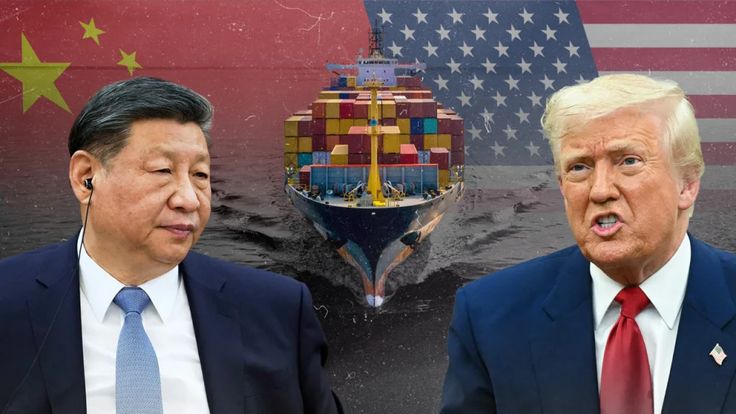
Trade remains one of the most contentious aspects of U.S.-China relations. Over the past few years, both countries have been locked in a fierce trade war, with each side imposing tariffs and trade restrictions in an effort to protect domestic industries and reduce trade imbalances.
In 2025, there have been significant developments aimed at alleviating some of these tensions. After years of escalating tariffs, both nations have entered a phase of cautious de-escalation. The United States has agreed to reduce certain tariffs on Chinese goods, while China has made concessions to purchase more U.S. agricultural products. Despite these efforts, the relationship remains fragile, with ongoing concerns over intellectual property rights, market access, and technological espionage.
The U.S. has also shifted its focus to securing its supply chains, particularly in the areas of semiconductor production, rare earth minerals, and critical infrastructure. China, on the other hand, is investing heavily in its domestic industries to reduce reliance on foreign technologies. Both nations are competing for dominance in emerging sectors like artificial intelligence, clean energy, and biotechnology, which will be crucial for economic growth in the coming decades.
Military Rivalry and Strategic Posturing
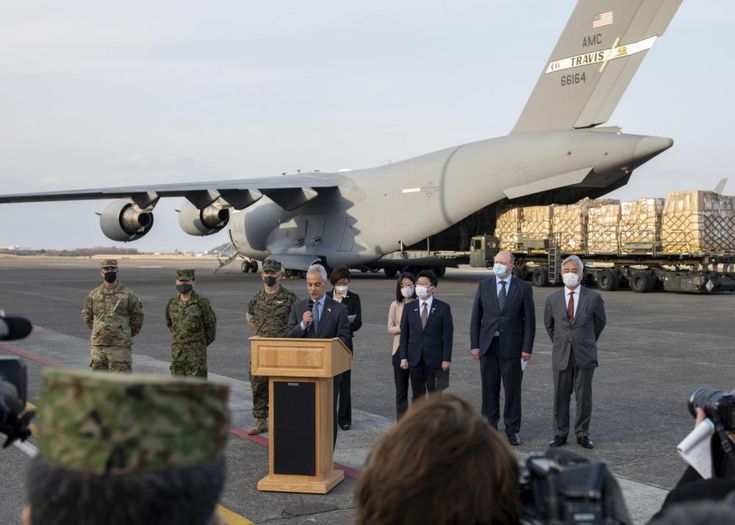
Security concerns between the U.S. and China have been another major point of friction. The Indo-Pacific region, in particular, has become a flashpoint for military tensions. The U.S. continues to conduct freedom of navigation operations in the South China Sea, where China has built and militarized artificial islands, claiming nearly the entire region as its territorial waters.
China views these U.S. military operations as a direct threat to its sovereignty and has responded by strengthening its own military presence in the region. Both countries are also expanding their military alliances, with the U.S. strengthening its ties with countries like Japan, South Korea, and Australia, while China has sought to deepen relations with Russia and countries in Africa and Latin America.
In addition to traditional military posturing, both nations are investing in cyber warfare capabilities and space technologies, further intensifying the rivalry. The growing militarization of space has led to concerns about the potential for space-based conflicts, with both countries developing anti-satellite weapons and competing for control over satellite networks.
Diplomatic Engagements and Global Influence
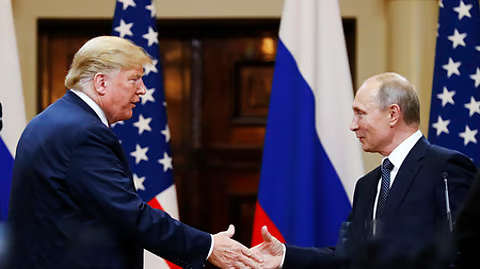
Despite the tensions in trade and security, diplomatic engagement between the U.S. and China has remained a key component of the relationship. In 2025, both countries have engaged in several rounds of high-level talks, aimed at managing disputes and improving communication channels. The U.S. has pushed for greater transparency in China’s military activities, while China has called for the U.S. to respect its sovereignty and avoid interference in domestic issues such as Hong Kong and Taiwan.
China has also become more assertive in its diplomatic efforts, seeking to expand its global influence through initiatives like the Belt and Road Initiative (BRI), which aims to build infrastructure and foster economic development in regions around the world. The U.S. has expressed concerns about the BRI, fearing that it could lead to Chinese political and economic domination in key regions.
On the global stage, both countries are vying for leadership in critical areas like climate change, global health, and international trade. The U.S. rejoined the Paris Agreement under President Biden, and China has committed to achieving carbon neutrality by 2060. While these shared goals present opportunities for cooperation, competition over how to address global challenges continues to define the relationship.
Technology and Cybersecurity
The technological rivalry between the U.S. and China is one of the most intense aspects of their relationship. Both countries are competing for supremacy in fields like artificial intelligence (AI), 5G telecommunications, and quantum computing. The U.S. has imposed sanctions on Chinese tech giants like Huawei and ZTE, citing national security concerns over potential Chinese espionage and data privacy issues. In response, China has doubled down on its efforts to become self-sufficient in technology development, creating its own semiconductor industry and investing heavily in AI and machine learning.
The growing importance of technology in national security has led to increased concerns over cybersecurity. Both the U.S. and China have been accused of cyberattacks aimed at stealing intellectual property, disrupting infrastructure, and influencing political outcomes. The race to develop advanced cyber capabilities is expected to intensify as both nations seek to protect their interests in an increasingly digital world.
Taiwan and Regional Security
One of the most sensitive issues in U.S.-China relations is the status of Taiwan, which China considers a part of its territory. The U.S. has long maintained a policy of “strategic ambiguity,” acknowledging China’s claims to Taiwan but also providing support to Taiwan through arms sales and diplomatic engagement. In 2025, tensions over Taiwan have reached a new high, with China conducting military exercises near the island and issuing warnings to the U.S. against interference.
The U.S. has reaffirmed its commitment to Taiwan’s defense, but has also called for peaceful dialogue between China and Taiwan to resolve the issue. The situation remains volatile, and any missteps could lead to military confrontation in the region. The security of the Taiwan Strait is critical to the global supply chain, especially in the semiconductor industry, and both countries have a vested interest in ensuring stability in the area.
The Road Ahead: Cooperation or Confrontation?
As we move further into 2025, the future of U.S.-China relations remains uncertain. While both countries have recognized the importance of managing their competition and finding areas of cooperation, the underlying tensions are unlikely to dissipate in the short term. The U.S. is focused on protecting its economic and national security interests, while China is determined to assert its dominance as a global power.
The U.S.-China relationship will continue to shape the international order in the coming years, influencing everything from trade policies to military strategies and global governance. The key question is whether both nations can find a balance between cooperation and confrontation, or whether the rivalry will escalate into a new Cold War.