




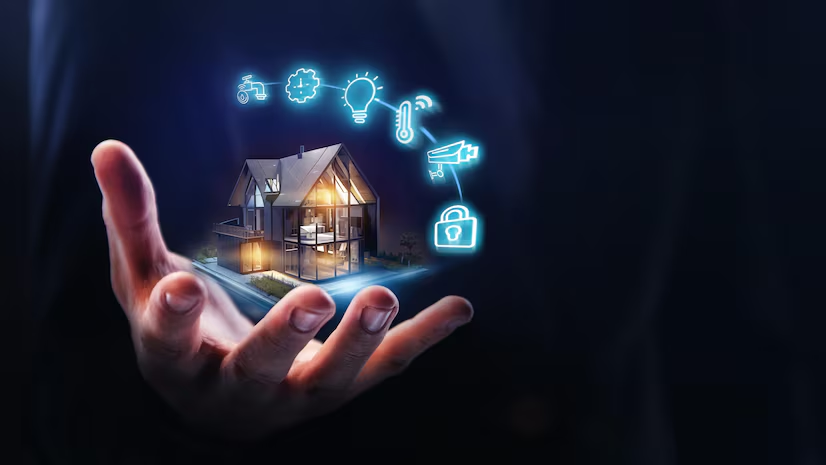
Imagine waking up to a home that knows your routine. The lights gently brighten as your smart coffee maker starts brewing your morning cup. Your thermostat adjusts to the perfect temperature, and your virtual assistant gives you the day’s weather, news, and calendar—all without lifting a finger. This is not science fiction—this is home automation powered by IoT (Internet of Things).
In today’s fast-paced, tech-driven world, smart homes are no longer a luxury—they’re a practical, energy-efficient, and secure way to live. From voice-activated assistants to smart security systems, IoT devices are revolutionizing how we interact with our living spaces.
🏡 What Is Home Automation?
Home automation refers to the automatic control of household devices through the internet. It allows you to control appliances, lighting, climate, entertainment systems, and security equipment from your smartphone, voice commands, or even preset schedules.
Powered by IoT (Internet of Things) technology, these devices communicate with each other and central hubs (like Amazon Alexa, Google Home, or Apple HomeKit) to create a synchronized, intelligent home ecosystem.
🔌 Popular Categories of Smart Home Devices
1. Smart Lighting Systems
Control brightness, color temperature, and on/off schedules remotely.
Set scenes like “Movie Night” or “Dinner Mode” with a single command.
Save energy with motion sensors and timers.
Popular devices: Philips Hue, LIFX, TP-Link Kasa Smart Bulbs.
2. Smart Thermostats
Learn your habits and automatically adjust temperatures.
Save on energy bills by heating or cooling only when needed.
Remote control via smartphone apps.
Top brands: Nest Thermostat, ecobee SmartThermostat, Honeywell Home.
3. Voice Assistants & Smart Hubs
Centralize control of all connected devices.
Use voice commands for daily tasks.
Integrate with calendars, reminders, music, and home control.
Popular choices: Amazon Alexa, Google Assistant, Apple Siri (via HomePod).
4. Home Security & Surveillance
Smart cameras with motion detection and night vision.
Video doorbells that notify your phone when someone knocks.
Door/window sensors and smart locks for real-time alerts.
Leading devices: Ring Video Doorbell, Arlo Pro, Blink, August Smart Lock.
5. Smart Appliances
Refrigerators that track groceries and suggest recipes.
Washing machines you can start from your phone.
Ovens that preheat on your way home from work.
These appliances offer both convenience and efficiency, learning and adapting to your lifestyle.
6. Smart Plugs & Switches
Make any device “smart” by connecting it to a smart plug.
Schedule on/off times for lamps, fans, or coffee machines.
Monitor energy consumption per device.
Examples: Wemo Mini Smart Plug, Meross Wi-Fi Smart Switch.
🔒 Smart Home Security: Safety Meets Innovation
One of the most impactful benefits of home automation is enhanced security. IoT-enabled systems allow for:
24/7 surveillance with live feeds directly to your smartphone.
Remote locking/unlocking of doors.
Instant alerts for intrusions, leaks, or unusual activity.
Integration with local authorities in case of emergency.
With AI-driven facial recognition and geofencing features, modern smart security solutions are proactive—not just reactive.
⚙️ How Does Home Automation Work?
At its core, a home automation system consists of:
Smart Devices (sensors, lights, locks, cameras, etc.)
Communication Protocols like Wi-Fi, Zigbee, Z-Wave, or Bluetooth
Central Control Hub (like Google Nest Hub or Amazon Echo)
Mobile App or web dashboard for remote control
All devices are connected via the cloud and communicate through APIs or local networks, enabling seamless control and automation routines (called “scenes” or “recipes”).
📱 Benefits of a Smart Home
✅ Convenience: Control everything from one app or voice assistant.
✅ Energy Efficiency: Use less power through automation and monitoring.
✅ Security: Stay aware of your home’s status 24/7, even when away.
✅ Customization: Set routines tailored to your schedule and habits.
✅ Accessibility: Ideal for elderly or differently-abled individuals to maintain independence.
🌐 The Expanding IoT Ecosystem
IoT isn’t limited to just home devices. It’s part of a growing network that includes:
Wearables (like fitness trackers syncing with smart scales)
Smart cars connecting to your garage or security system
Healthcare devices that monitor vitals and send data to your doctor
Environmental sensors that track air quality or humidity
As more devices become “smart,” the Internet of Things is creating a fully connected lifestyle where everything works together effortlessly.