Introduction
North Korea’s nuclear program has been a source of global concern for decades, shaping the security landscape of East Asia and influencing international diplomacy. The regime in Pyongyang has persistently pursued nuclear weapons development, despite widespread condemnation, sanctions, and diplomatic pressure from the international community. The nuclear ambitions of North Korea not only pose a direct threat to its neighbors—South Korea and Japan—but also have far-reaching implications for regional stability and global security.
In this article, we examine the origins and development of North Korea’s nuclear program, its current capabilities, the international response, and the potential consequences for the future of the Korean Peninsula and beyond.
The Origins of North Korea’s Nuclear Program
North Korea’s pursuit of nuclear technology began in the 1950s, shortly after the Korean War, when the country sought to develop weapons of mass destruction (WMDs) as a deterrent against external threats. In the early stages, North Korea sought to acquire nuclear technology from the Soviet Union and other sources. The pursuit of a nuclear program was driven by a desire for strategic security, national pride, and a desire to counterbalance the growing military power of South Korea and its ally, the United States.
North Korea officially established its nuclear research program in the 1960s, focusing on uranium and plutonium-based nuclear technology. Over the years, the program has steadily evolved, despite international opposition and sanctions. However, it wasn’t until the 1980s and 1990s that North Korea’s nuclear ambitions came into the global spotlight, particularly when the country withdrew from the Nuclear Non-Proliferation Treaty (NPT) in 2003.
Key Developments in North Korea’s Nuclear Program
Over the decades, North Korea’s nuclear program has gone through several key milestones that highlight its determination to develop a credible nuclear deterrent.
1. Early Nuclear Tests and Missile Development:
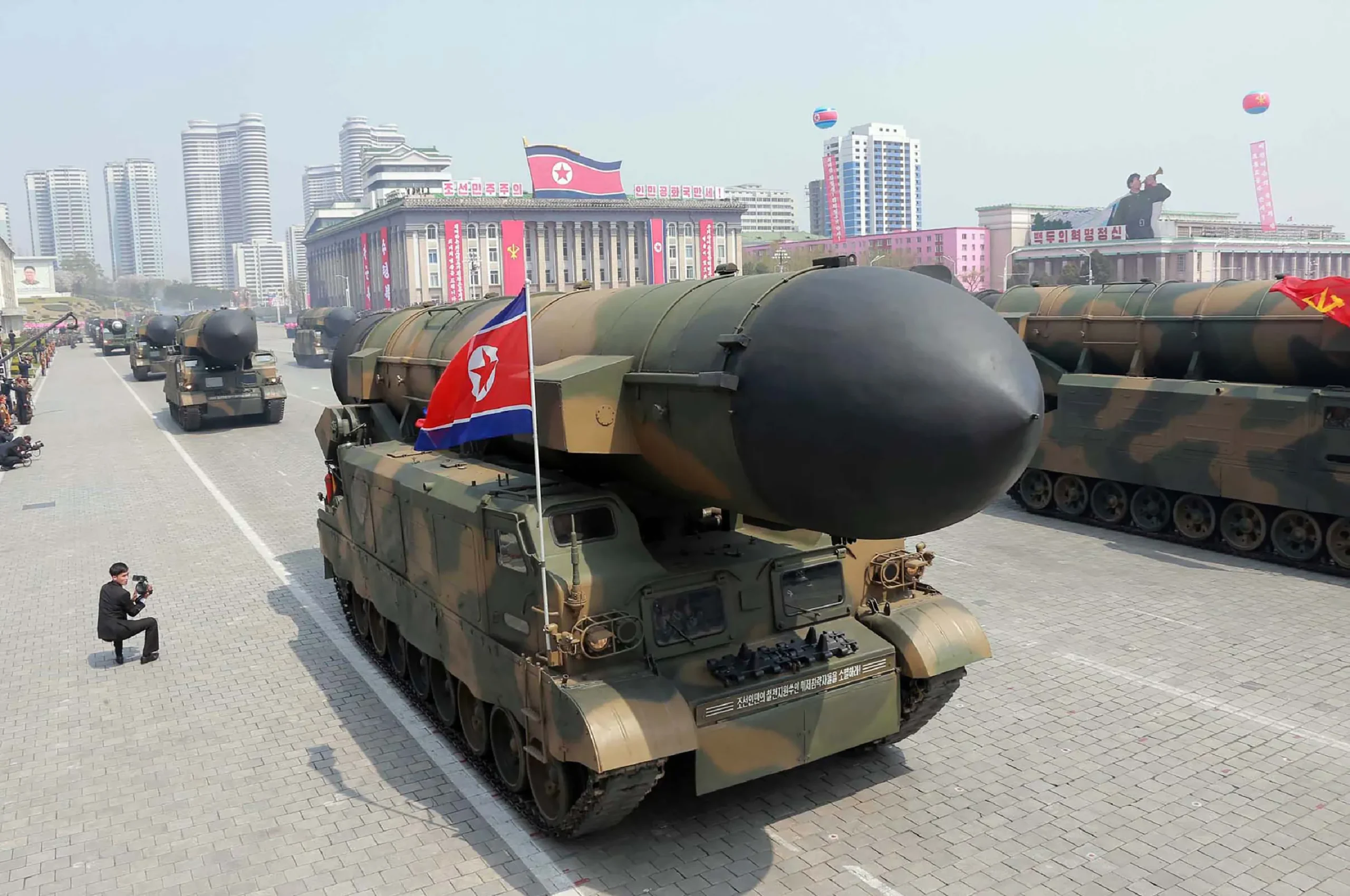
North Korea conducted its first nuclear test in 2006, which was followed by subsequent nuclear tests in 2009, 2013, 2016, and 2017. These tests, while not always successful, demonstrated the country’s ability to produce nuclear weapons and the increasing sophistication of its nuclear technology. Additionally, North Korea has developed a significant missile program, including long-range missiles capable of reaching South Korea, Japan, and, potentially, the United States.
2. The Launch of ICBMs:
In 2017, North Korea successfully tested intercontinental ballistic missiles (ICBMs), which marked a significant development in its nuclear capability. The successful test of these missiles indicated that North Korea was moving closer to achieving its goal of developing a nuclear-capable missile that could strike targets thousands of kilometers away. This raised fears about the potential for nuclear attacks on the United States, leading to increased international alarm.
3. Hydrogen Bomb Tests:
North Korea’s 2017 test of a hydrogen bomb (thermonuclear bomb) was a major escalation in its nuclear program. This test, the most powerful detonation the country had carried out to date, demonstrated North Korea’s ability to develop more advanced nuclear weapons. The international community condemned the test, and it further strained relations with the United States, South Korea, Japan, and other regional powers.
Current Status of North Korea’s Nuclear Capabilities
North Korea’s nuclear program is believed to have advanced significantly, with estimates suggesting that the country has developed a stockpile of nuclear warheads. While exact figures are difficult to verify, North Korea is thought to possess enough nuclear material for dozens of weapons, including advanced warheads designed to fit on missiles.
The country is also believed to have developed the capability to miniaturize its nuclear warheads, making them capable of being mounted on ICBMs and other missile systems. This ability is crucial to North Korea’s strategic military goals, as it allows the country to threaten distant targets, including the United States, with nuclear weapons.
North Korea’s nuclear arsenal is thought to be increasingly sophisticated, with various reports suggesting that the country is working on producing more powerful warheads, including those that could carry nuclear payloads capable of delivering a stronger impact. The development of a more reliable and extensive missile defense system is also believed to be a priority for the North Korean regime.
International Response and Diplomacy
The international community has responded to North Korea’s nuclear program with a mix of sanctions, diplomatic pressure, and occasional engagement. Efforts to curb North Korea’s nuclear ambitions have largely been unsuccessful, with the regime showing little willingness to denuclearize. The key components of the international response have included:
1. United Nations Sanctions:
Since 2006, the United Nations Security Council (UNSC) has imposed a series of sanctions aimed at curbing North Korea’s nuclear and missile activities. These sanctions target key sectors of the North Korean economy, including exports, imports, financial institutions, and military technology. While these sanctions have had an economic impact on North Korea, the regime has managed to find ways to bypass or mitigate some of their effects.
2. The Six-Party Talks:
The Six-Party Talks, which took place from 2003 to 2009, were an attempt by the United States, China, Russia, South Korea, Japan, and North Korea to negotiate the denuclearization of the Korean Peninsula. While there were some early successes, including an agreement on the temporary suspension of nuclear activities, the talks ultimately collapsed, with North Korea continuing to expand its nuclear program.
3. Diplomatic Engagement:
In recent years, there have been attempts to engage North Korea in direct diplomacy, most notably the summits between North Korean leader Kim Jong-un and U.S. President Donald Trump in 2018 and 2019. While these summits initially raised hopes for a breakthrough in denuclearization, they ultimately failed to produce significant results, with North Korea refusing to dismantle its nuclear program and the United States demanding complete denuclearization in exchange for sanctions relief.
4. The Role of China and Russia:
China and Russia have been key players in the diplomatic efforts surrounding North Korea. As North Korea’s closest neighbors and major economic partners, both countries have played a dual role in supporting North Korea while also encouraging denuclearization. China, in particular, has pushed for a balanced approach to sanctions and dialogue, calling for both the reduction of tensions and the gradual implementation of denuclearization.
Regional Security Implications
The nuclearization of North Korea has significant implications for the security of the entire East Asian region. North Korea’s nuclear weapons pose a direct threat to South Korea and Japan, both of which have significant economic, military, and strategic ties to the United States. The prospect of North Korea launching a nuclear strike on its neighbors, while unlikely, has forced countries like South Korea and Japan to reconsider their own defense strategies, with some even contemplating the acquisition of their own nuclear deterrents.
The growing missile capabilities of North Korea also affect regional missile defense systems. Both South Korea and Japan have sought to enhance their missile defense systems, including the deployment of systems like THAAD (Terminal High Altitude Area Defense) in South Korea, in response to the growing missile threat from North Korea.
Additionally, the nuclear threat posed by North Korea has caused concern among global powers, particularly the United States. The fear of North Korea developing nuclear missiles capable of reaching the U.S. mainland has led to increased military presence in the region, as well as strengthening of alliances with South Korea and Japan.
The Future of North Korea’s Nuclear Program
The future of North Korea’s nuclear program is uncertain, but there are several potential scenarios to consider:
1. Continued Development and Escalation:
North Korea may continue to develop its nuclear and missile capabilities, posing an increasing threat to regional and global security. This could lead to further sanctions, military confrontations, and diplomatic deadlock, prolonging the instability in the region.
2. Denuclearization through Diplomacy:
While it remains unlikely, there is the possibility of a negotiated settlement that could lead to North Korea dismantling its nuclear program in exchange for economic incentives, security guarantees, and integration into the global community. However, North Korea’s track record of reneging on agreements makes this outcome difficult to predict.
3. Proliferation and Regional Arms Race:
As North Korea continues to develop its nuclear program, it could encourage neighboring countries, such as South Korea and Japan, to reconsider their own nuclear policies. The prospect of nuclear proliferation in East Asia is a growing concern, as countries in the region may seek to acquire their own nuclear capabilities as a deterrent against North Korea’s threats.